Difference Between Remarketing and Retargeting

Ever noticed how you browse a product once and then see it everywhere you go online? On social media, on websites, even inside your inbox? That’s where the difference between remarketing and retargeting starts to matter, and we’ll break it all down in detail, so please keep reading.

Retargeting vs Remarketing

First, let’s clear the confusion that most marketers still struggle with.

The key differences between retargeting and remarketing on Google come down to audience type and communication method.

Retargeting:

  • Targets potential customers
  • Uses paid ads on external platforms
  • Relies on on-site interactions like page visits
  • Focuses on bringing users back to convert

Remarketing:

  • Targets existing customers
  • Uses email marketing campaigns and CRM tools
  • Relies on previous interactions and purchase history
  • Focuses on repeat purchases and loyalty

Both strategies support each other. Retargeting brings users in, and remarketing keeps them coming back.

Remarketing and retargeting combined reduce drop-offs and improve conversion rates without increasing unnecessary ad pressure.

When Ads Start Following You Around the Web

What happens when users move across different platforms? Retargeting usually steps in first. It tracks people who have already visited a website or interacted with a page. It then serves digital ads to bring them back. These ads often appear on social media platforms, ad networks, and other websites. The goal is to pull back users who showed interest but didn’t convert.

Remarketing, on the other hand, works a bit differently. It focuses more on existing customers and uses direct communication channels like email or CRM-based campaigns. It reconnects with people who already know the brand and have interacted before.

Both strategies rely on customer data, but they use it in different ways to push engagement and conversions.

Breaking Down Retargeting Campaigns & Their Core Logic

Let’s get into how retargeting actually works in real marketing setups.

Retargeting campaigns primarily rely on tracking user behavior, such as page visits, product views, and cart activity. These users have already shown interest, which makes them warm leads.

Marketers then use platforms like Google Ads, Meta Ads, and other paid media channels to display personalized ads.

Key mechanics behind retargeting include:

  • Tracking previously visited pages using cookies or pixels
  • Using first-party data to segment audiences
  • Delivering tailored ads across other websites and apps
  • Controlling ad frequency to avoid fatigue

The idea is to stay visible until the user returns and completes the action.

Retargeting also helps reduce wasted ad spend by focusing on users who have already shown interest. At Digital Engage, we structure retargeting strategies to ensure brands in Nashville, Knoxville, and Johnson City get stronger returns from their paid campaigns.

Remarketing Campaigns & Customer Re-Engagement

If we shift toward remarketing, it works more deeply into the customer lifecycle.

Remarketing campaigns focus on nurturing existing customers rather than chasing new traffic. These users have already purchased, signed up, or interacted with the brand.

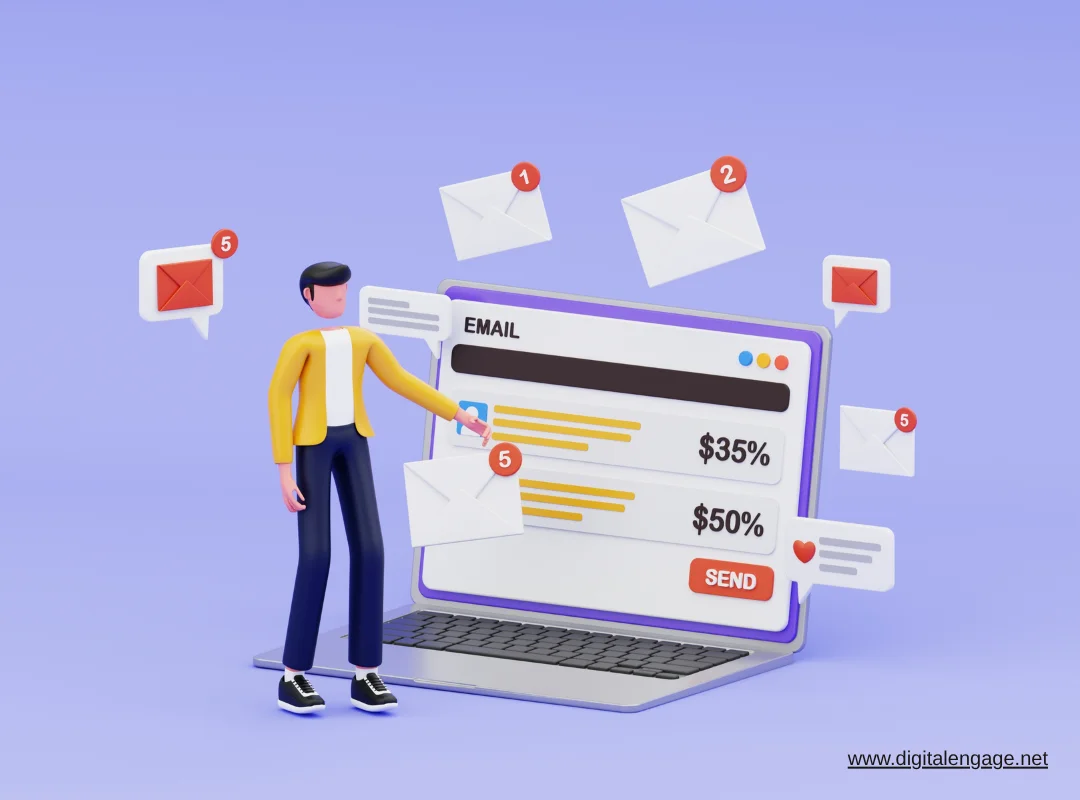
This strategy uses channels like email marketing campaigns, CRM-based messaging systems, loyalty program notifications, and personalized offers based on purchase history.

Remarketing focuses heavily on direct communication. Instead of ads following users across websites, it sends targeted messages directly into inboxes or app notifications.

For example, a personalized email reminding a customer about a product refill or offering a discount on a repeat purchase can significantly increase lifetime value.

Digital Engage designs remarketing strategies that help businesses in Knoxville, Nashville, and Johnson City build long-term customer relationships instead of one-time sales.

Why Businesses Combine Retargeting & Remarketing Together

Let’s look at how smart brands actually use both strategies side by side.

Modern marketing doesn’t treat these as separate tools anymore. Instead, it builds a full funnel where both work together.

When brands combine remarketing and retargeting, they create a continuous engagement loop. Users move from interest to conversions to loyalty without dropping off.

Digital Engage builds these full-funnel systems using Google Ads, Meta Ads, and advanced conversion tracking tools like Conversion API setups to ensure data accuracy and better performance across campaigns.

Challenges, Privacy Concerns, & Smarter Targeting Approaches

Privacy rules around third-party cookies continue to change how retargeting works. Platforms now depend more on first-party data and consent-based tracking.

Other common challenges include overexposure leading to ad fatigue, poor segmentation causing irrelevant ads, and weak messaging that fails to re-engage users.

To solve this, marketers now rely on conversion API setups, better segmentation, and more personalized messaging.

Why This Strategy Matters for Modern Digital Growth

Both retargeting and remarketing play a critical role in digital growth. One brings users back, the other keeps them engaged.

They increase conversions, improve engagement, reduce marketing waste, and strengthen customer relationships when used together. Brands that ignore either strategy often lose warm leads and repeat customers without even realizing it.

That’s why Digital Engage in Nashville focuses on building structured campaigns that connect retargeting strategies with remarketing workflows. Partner with a professional who can guide you well through the whole process.

Stop Wasting Ad Spend & Partner with Digital Engage

If you’ve been running ads and still feel like users are “almost converting but not quite,” you’re likely sitting in that middle ground where remarketing and retargeting get mixed up. At Digital Engage, we work with Google Ads campaigns, social media advertising, SEO strategy, conversion tracking, and full-funnel digital marketing. We help businesses separate intent stages properly so ad budgets don’t get spent talking to the wrong audience at the wrong time. Contact us today to start your free consultation.

Frequently Asked Questions

Let’s answer some common questions businesses ask when planning their campaigns.

Q1. What is the main difference between remarketing and retargeting?

A: Retargeting focuses on ads for new or potential customers, while remarketing focuses on re-engaging existing customers through direct communication.

Q2. How does retargeting work in Google Ads?

A: It tracks user activity on your website and shows tailored ads on other platforms to bring users back.

Q3. Does remarketing help increase repeat purchases?

A: Yes, remarketing encourages repeat purchases through personalized email campaigns and loyalty-based messaging.

Q4. Does Digital Engage offer retargeting services in Johnson City, Knoxville, and Nashville?

A: Yes, Digital Engage provides fully managed retargeting campaigns across all three locations.

Q5. Can Digital Engage build full remarketing email campaigns for my business?

A: Yes, Digital Engage creates personalized remarketing email workflows designed to re-engage and retain customers.

Read More
devnew June 29, 2026 0 Comments

How to Find Conversion ID in Google Ads

Finding the right tracking details can feel like searching for a needle in a haystack when you first open your Google Ads account. Yet once you know where to look, the process becomes simple and practical. If you want to learn how to find conversion ID in Google Ads, this guide will walk you through every step and help you make better use of your conversion tracking data.

Let’s Start With Why the Conversion ID Matters

Before you jump into menus and settings, it helps to understand why the conversion ID plays such an important role.

Every Google Ads conversion uses a unique conversion ID. Google uses this ID to connect your website actions with the conversion action you created inside your Google Ads account. Without the correct ID, your conversion tracking setup cannot record valuable actions such as form submissions, purchases, phone calls, or newsletter signups.

When you use the correct tracking details, you can measure campaign performance, improve bidding decisions, and focus your budget on what actually produces results.

Understanding the Conversion ID & Conversion Label

Many advertisers confuse the conversion ID with the conversion label. Both work together, but they serve different purposes.

The conversion ID identifies your Google Ads account for tracking purposes. The conversion label identifies a specific conversion action inside that account.

Each conversion action receives its own unique conversion label, while the account uses the same conversion ID.

When you install tracking through Google Tag Manager, you often need both values during the tag setup process.

Ready to Find It? Follow These Steps Inside Google Ads

If you have already created a conversion, you can locate the conversion ID directly from your Google Ads account. It’s a simple step-by-step process:

Step One: Open Your Google Ads Account

First, log in to your Google Ads account.

From the dashboard, look toward the upper navigation area and locate the Tools section. Google occasionally updates its interface design, but the conversion settings remain easy to access.

Step Two: Go to Conversion Tracking Settings

Next, select Goals from the left-side navigation.

Then choose Conversions.

This section displays every conversion action connected to your account. You may see an existing conversion, an already existing conversion, or a new conversion, depending on your setup.

Step Three: Select the Conversion Action

Now choose the specific conversion you want to track.

Click the conversion name to open its details.

Google will display additional tracking information related to that conversion.

Step Four: View Tag Setup Instructions

After opening the conversion action, find the tracking setup area.

Select Tag Setup.

Google normally presents three options for implementation:

  • Install the tag yourself
  • Use Google Tag Manager
  • Send instructions to a developer

Choose the option that matches your situation.

Step Five: Copy the Conversion ID

Once you enter the setup screen, Google displays the required tracking values.

Simply copy the Conversion ID and save it for implementation.

That’s it. You have successfully located your conversion ID.

Here’s the Fastest Method for Using Google Tag Manager

If you use Google Tag Manager, finding and applying the conversion ID becomes even easier.

Many businesses prefer Google Tag Manager because it helps them manage tracking without repeatedly editing website code.

First, Create a Google Ads Conversion Tag

Inside Google Tag Manager, create a new tag.

Choose Google Ads Conversion Tracking as the tag type.

At this point, return to your Google Ads conversion settings and paste the values into the correct fields.

Then, configure the Trigger

Next, select the event that should fire the conversion.

For example, form submission, purchase confirmation page, button click, and lead generation page.

Choose the Trigger carefully because it determines when Google records the conversion.

Finally, test the Setup

Before you publish changes, always test your tracking.

Open Preview Mode in Google Tag Manager and verify that the tag fires correctly.

A few minutes of testing can save hours of troubleshooting later.

What If You Need the Conversion ID From an Existing Setup?

Sometimes you inherit an account and need to identify tracking information from an existing conversion.

In that case, you have several places to check.

Check Google Tag Manager

If the account already uses Google Tag Manager, open the Google Ads Conversion Tracking tag.

The Conversion ID appears directly inside the tag configuration.

Check Website Source Code

Some websites install conversion tracking manually.

Open the page source and search for terms such as AW, conversion ID, or Google Ads conversion tracking.

You can identify the tracking values inside the installed script.

Check Documentation

Many marketing teams keep implementation notes.

Review setup documents, spreadsheets, or developer records before making changes.

This small step can prevent duplicate tracking issues.

Common Mistakes That Cause Tracking Problems

Let’s talk about a few issues that often create headaches.

Using the Wrong Conversion Label

Many users accidentally pair the correct conversion ID with the wrong conversion label.

Google cannot match the conversion properly when this happens.

Always double-check both values before publishing.

Creating Duplicate Conversion Actions

Some advertisers create a new conversion instead of using an already existing conversion.

This mistake can inflate reporting and create inaccurate data.

Review your conversion list before creating additional actions.

Publishing Without Testing

Many users rush through implementation and skip testing.

That approach rarely works in the long run.

Always verify that your tags fire correctly before launching campaigns.

Accurate Conversion Tracking Matters

Now that you know how to find the conversion ID, the next step involves using it correctly.

Accurate conversion tracking helps you measure campaign success, track qualified leads, improve ad spending decisions, and identify high-performing keywords.

Without reliable tracking, you make decisions based on guesswork instead of real performance data.

Bringing Everything Together

Finding a conversion ID in Google Ads does not require advanced technical knowledge. You simply need to access your conversion settings, open the correct conversion action, and review the tag setup details.

Once you locate the conversion ID and conversion label, you can connect them through Google Tag Manager or direct website installation. With accurate conversion tracking in place, you gain a clearer view of campaign performance and make more informed advertising decisions.

Before you make any changes, remember to test everything carefully. A properly configured tracking setup by Digital Engage in Nashville gives your Google Ads campaigns the data they need to perform at their best.

Begin with Your Google Ads Conversion Journey at Digital Engage

If you’re trying to locate your conversion ID in Google Ads, you’re probably in the middle of setting up tracking and don’t want to break anything in the process. It’s easy to get stuck between tags, events, and account settings, especially when multiple conversion actions are already running. 

Digital Engage handles Google Ads conversion tracking, Google Tag Manager setup, PPC campaign management, analytics configuration, and website tracking implementation. This way, your data reflects what users are doing instead of leaving you with incomplete or duplicated reporting. If you want your tracking set up correctly from the start, contact us today. Let’s begin with a free consultation.

Frequently Asked Questions

If you still have questions about Google Ads conversion tracking, these quick answers may help.

Q1.Does Digital Engage provide Google Ads conversion tracking services in Johnson City?

A: Yes, Digital Engage helps businesses in Johnson City set up and manage accurate Google Ads conversion tracking.

Q2. Can Digital Engage help companies in Knoxville and Nashville with Google Tag Manager?

A: Yes, our team supports businesses throughout Knoxville and Nashville with Google Tag Manager and Google Ads tracking solutions.

Q3. How do I find my conversion ID in Google Ads?

A: Open Goals, select Conversions, choose your conversion action, and review the Tag Setup section.

Q4. Do I need both a conversion ID and a conversion label?

A: Yes, most Google Ads conversion tracking implementations require both values to track actions correctly.

Q5. Can I use Google Tag Manager for Google Ads conversion tracking?

A: Yes, Google Tag Manager provides one of the easiest and most organized ways to manage Google Ads conversion tracking on a website.

Read More
devnew June 29, 2026 0 Comments

How Much Duplicate Content Is Acceptable

Most website owners know that duplicate content can create SEO problems, but many still wonder: how much duplicate content is acceptable? A small amount exists naturally, but large-scale duplication can hurt visibility. We will break down everything you need to know, so keep reading.

What Qualifies As Duplicate Content?

Before discussing percentages or limits, it helps to understand what duplicate content actually means. Duplicate content refers to blocks of the same content that appear on more than one page online. This content may exist on the same website or across different websites.

Many people assume that every copy of content creates a problem. That is not true. Search engines understand that some duplication happens naturally. However, problems begin when duplicate pages make it difficult for search engines to determine which version deserves attention in search engine results.

A website may contain multiple pages with similar information, product details, category descriptions, or technical specifications. When those pages become too similar, they can create duplicate content issues that affect visibility and performance.

Answering The Main Question

If you came here looking for an exact percentage of duplicate content allowed to use, you may feel disappointed. Search engines do not publish a fixed number that defines how much duplicate content is acceptable.

Instead, they evaluate intent and impact. If your content exists because of normal website functions, you usually have little to worry about. If you create duplicate pages to manipulate search engine results or rankings, then problems can arise.

Google focuses on providing users with the best experience. When several pages offer nearly identical content, Google often chooses one version and ignores the rest. This process can dilute link equity, waste crawl budget, and reduce overall search rankings.

The real question is not how much duplicate content exists. The better question asks whether duplication creates confusion for users and search engines.

Internal Duplicate Content

One of the most common SEO problems involves internal duplicate content. This happens when several pages on your own website display nearly identical information.

For example, an online store may create:

  • Multiple product pages using the same product description
  • Several category pages targeting the same keywords
  • Location pages with only the city name changed
  • Different URLs that display the same page

These situations create duplicate URLs, multiple URLs, and multiple versions of the same information. As a result, search engines struggle to determine the preferred version.

When a site contains too many duplicates, the site’s performance can suffer. Search engines may split ranking signals among several pages rather than concentrating authority on a single page.

Let’s Discuss External Duplicate Content Too

Now let’s move beyond your own site.

External duplicate content occurs when content appears across different websites. This issue can affect ecommerce businesses, publishers, and blogs.

For example, several stores may publish the same product description supplied by a manufacturer. Likewise, websites may republish the same article without adding new insights.

Contrary to popular belief, Google penalizing duplicate content is not always an accurate statement. Google rarely applies direct duplicate content penalties in ordinary situations. Instead, Google usually selects one version to display in search results and filters out the others.

The bigger concern involves lost visibility. If another website gains authority for the same content, your page may struggle to earn valuable search traffic.

Why Search Engines Dislike Excessive Duplication

Let’s be honest. Search engines want efficiency.

When websites create unnecessary duplicates, they force search engines to spend resources processing content that offers little additional value. That creates several problems:

  • It can confuse search engines when selecting a preferred URL
  • It can split links pointing to different versions of the same page
  • It can weaken link popularity and link equity
  • It can reduce overall search rankings
  • It can create a poor user experience

Imagine walking into a library where the same book appears on every shelf. Finding something useful would become difficult. Search engines face a similar challenge when they encounter too many duplicate pages.

The Common Causes of Duplicate Content

Many website owners create duplicates without realizing it.

A few common causes include URL parameters generated by filters and sorting options, tracking codes, and session IDs, and HTTP and HTTPS versions of the same page.

Large e-commerce sites often encounter these issues because product catalogs generate many URL variations automatically.

Even discussion forums can create duplicate content through pagination, tags, archives, and category structures.

Canonical Tags & Preferred URLs

Fortunately, fixing duplicate content often proves easier than people expect.

A canonical tag acts as a signal that tells search engines which page represents the official version. This small HTML element helps consolidate authority and prevents unnecessary confusion.

When you implement canonical tags, you guide search engines to the preferred URL rather than letting them guess. This approach works especially well when multiple versions of a page must exist for business reasons.

Other Ways to Manage Duplicate Content

Canonicalization is only one piece of the puzzle.

Website owners should also review their technical setup and content strategy. Several methods help reduce duplication:

First, maintain a clean URL structure. Consistent URLs help search engines understand your content.

Second, use the noindex meta tag for pages that should not appear in search results.

Third, submit an updated XML sitemap to help search engines locate important pages quickly.

Fourth, monitor Google Search Console regularly. It often identifies duplicate pages before they become larger problems.

Finally, create valuable content that offers unique information. Nothing beats originality.

Clearing Up the Biggest Duplicate Content Myths

Many SEO myths refuse to disappear.

One common myth claims that Google immediately punishes every duplicated sentence. That simply does not happen.

Another myth suggests that websites must maintain a specific percentage of uniqueness. Search engines do not use a public duplicate-content percentage threshold.

Some people also believe that every duplicate automatically triggers legal action. In reality, copyright concerns usually involve unauthorized copying rather than routine technical duplication. In serious cases, copyright holders may reference the Digital Millennium Copyright Act, but that differs from standard SEO concerns.

The truth sits somewhere in the middle. Search engines mainly focus on quality, usefulness, and intent.

Let’s Focus On User Value Above Everything Else

At the end of the day, search engines reward websites that help users. If your pages offer original insights, clear answers, and useful information, you stand on much stronger ground. If dozens of pages repeat the same message with only minor changes, your site may struggle.

Final Thoughts On Duplicate Content

The answer to how much duplicate content is acceptable does not come down to a specific number. Small amounts of duplication occur naturally on most websites. Problems arise when duplication creates confusion, wastes crawl resources, weakens authority, or attempts to manipulate search engine results. That is why Digital Engage in Johnson City focuses on creating content strategies that prioritize users first and rankings second. Strong SEO starts with useful information.

Developing Outstanding Content Strategies with Digital Engage

Digital Engage supports SEO audits, content optimization, technical SEO fixes, canonical tag implementation, and website structure improvements. If you’re asking how much duplicate content is acceptable, you’re likely dealing with pages that share similar product descriptions, service text, or category content across your website. 

We help businesses reduce harmful duplication while keeping content scalable and search-friendly. Our goal is not to eliminate repetition entirely, but to make sure Google understands which pages matter most. Contact us today for a free consultation.

Frequently Asked Questions

Many website owners ask similar questions about duplicate content and SEO. Here are a few quick answers.

Q1. Does Google penalize duplicate content on every website?

A: No. Google usually selects a preferred version instead of applying direct penalties.

Q2. How can Digital Engage help with duplicate content issues?

A: Digital Engage audits websites, identifies duplication problems, and recommends SEO-focused solutions.

Q3. Can duplicate product descriptions hurt ecommerce SEO?

A: Yes. Reusing the same product descriptions across many pages can weaken rankings and reduce visibility.

Q4. Does Digital Engage provide SEO services in Johnson City, Knoxville, and Nashville?

A: Yes. Digital Engage serves businesses throughout Johnson City, Knoxville, and Nashville.

Q5. Can location pages create duplicate content problems?

A: Yes. Pages for more than one location can create duplication if they contain nearly identical content.

Read More
devnew June 29, 2026 0 Comments

How Much Do Google Ads Cost In 2026?

The answer to how much Google Ads cost in 2026 depends on your industry, competition, targeting, and campaign goals. Some businesses spend a few hundred dollars per month, while others invest thousands. In most industries, Google Ads costs continue to vary significantly because ad auctions, competition levels, and user demand influence pricing every day.

Google Ads Costs in 2026

Businesses entering paid advertising generally want a straightforward answer regarding Google Ads pricing. The challenge is that there is no fixed price. Google operates through an auction system where advertisers compete for visibility. The amount you are paying is influenced by:

  • Your competitors
  • Your quality score
  • Your targeting settings
  • The value Google assigns to your advertisements.

The cost of advertising has evolved during the last few years. Competition increases across many sectors as more businesses invest in digital marketing. This increase in competition directly impacts ad costs, making campaign management more important than ever.

When discussing Google advertising costs, it’s important to understand that businesses retain control over their spending. You can define a daily or monthly Google Ads budget that aligns with your business objectives and the resources that you have.

If you are trying to understand the latest platform changes, you may also want to read What Are the New Updates in Google Ads for additional insights into Google’s evolving advertising ecosystem.

How Google Ads Work in 2026

To understand pricing, you must first understand how Google Ads works.

  • Google uses an auction-based system to determine which ads appear when users search.
  • Every advertiser enters bids on selected keywords.
  • Google analyzes multiple factors before displaying ads.

The success of Google Ads campaigns usually depends on how well you connect your search intent with relevant advertisements and optimized website experiences.

Average Google Ads Cost Per Click in 2026

The Role of Average CPC in Ad Pricing

Average CPC (cost per click) is one of the most common metrics for Google Ads costs. This metric reflects how much you pay when a user clicks an advertisement. The average Google Ads cost per click varies across industries.

Highly competitive sectors experience higher click costs because multiple advertisers compete for the same audience.

Less competitive industries may experience lower click costs and more affordable customer acquisition opportunities.

Having a complete understanding of average CPC provides useful context, but you should focus on return from advertising investment rather than click prices alone. A higher click cost may still produce good revenue if those clicks convert into customers.

Businesses evaluating AI-powered campaign management should also explore What Are the New Google Ads Features 2026 to learn about recently introduced tools and automation capabilities.

Why Ad Rank Influences Costs

A major factor that affects Google Ads pricing is “ad rank”. Google calculates ad rank using several components, including:

  • Bid amount
  • Expected click-through rate
  • Ad quality
  • User experience considerations

You should always focus on improving your ad quality frequently, as doing so will help you compete successfully without dramatically increasing your ad spend. This is why experienced marketers focus on optimization rather than relying solely on larger budgets.

How Quality Score Affects Your Spending

The quality score is one of the most influential metrics in a Google Ads account. This measurement reflects the quality and relevance of your keywords, advertisements, and destination pages.

A strong quality score can improve visibility and drive stronger campaign performance. Google rewards you if you deliver useful experiences to users. This means optimized landing pages and relevant messaging contribute to better outcomes.

The Impact of Bidding Strategy On Costs

Every successful campaign depends on selecting the right bidding strategy. In 2026, you can choose from multiple bidding options that are designed around impressions, clicks, conversions, or business objectives.

Your chosen bidding strategy influences how aggressively Google participates in auctions on your behalf. Some strategies focus on conversions or customer acquisition goals, while others focus on visibility.

The relationship between bidding and budget management determines how much businesses ultimately spend on Google Ads. Poor bid management increases costs without generating meaningful results, while bidding strategically can improve performance.

Before launching new campaigns, it is worth reviewing the Google Ads Guidelines for 2026 to understand the latest advertising requirements and policy updates.

What is the Google Ads Threshold for 2026

The Importance of the Google Search Network

Many advertisers begin with the Google Search Network, where text ads appear alongside search results. This remains one of the most popular advertising environments, and the reason is that it captures users actively searching for products and services.

The Google Search Network continues to generate value because users generally display strong purchase intent. You, as a business owner or advertiser, can target specific keywords and connect with your audiences during critical decision-making moments.

How the Google Display Network & Video Ads Affect Budgets

Beyond search advertising, businesses frequently invest in the Google Display Network and video ads. These formats serve different purposes and often have different pricing structures.

The Google Display Network reaches users across websites, apps, and digital properties. Display campaigns often focus on brand awareness, remarketing, and audience expansion. 

Stay informed about platform changes by reviewing the latest Google documentation updates.

Managing Negative Keywords & Avoiding Waste

One of the most important components of a successful Google Ads strategy is the use of negative keywords. These terms block ads from appearing for unrelated searches.

Without proper campaign management, you may receive clicks from irrelevant searches that do not generate meaningful results. These unnecessary clicks can increase spending and reduce the efficiency of your ad campaign.

Always use negative keywords strategically to improve targeting precision and focus the budget on higher-value opportunities. This becomes increasingly important as competition and advertising costs continue to rise.

Why Landing Pages Matter

Many advertisers focus exclusively on ads while overlooking the importance of landing pages. In reality, destination pages play a major role in the success of your ad campaign.

Google also considers the quality of the destination page when calculating performance metrics. This means website quality can indirectly influence outcomes of your campaign and advertising costs.

Choosing Between Different Google Ads Formats

Modern advertisers can choose from different Google Ads formats, including:

  • Search ads
  • Display ads
  • Shopping ads
  • Video campaigns

Selecting the right combination of advertising formats depends on your budget and audience behavior.

Maximize your local visibility by learning how to connect your GBP to Google Analytics for deeper insights.

Is $100 a Day Good for Google Ads

Using the Google Ads Keyword Planner for Better Decisions

The Google Ads Keyword Planner remains one of the most valuable resources for campaign planning. Businesses use the Google Ads Keyword Planner to discover:

  • Keyword opportunities
  • Estimate search demand
  • Understand competitive trends

Google Ads Management Cost

Beyond media spending, you, as a business owner or advertiser, should consider Google Ads management costs when planning budgets. Campaign management involves:

  • Keyword research
  • Creation of the ad
  • Bid management
  • Optimization
  • Reporting
  • Ongoing monitoring of the performance

Digital Engage works with businesses that want stronger advertising performance through data-driven campaign management and continuous optimization. In Knoxville or Johnson City? Visit us today.

Conclusion

The answer to how much Google Ads costs in 2026 varies from one business to another. Costs depend on industry demand, competition,  selection of the keywords, campaign structure, ad quality, and budget allocation.

You can launch campaigns with modest budgets or invest substantially larger amounts, depending on growth objectives. The most important factor is not simply how much you spend, but how efficiently your campaigns generate results.

You can maximize the value of your advertising investment by:

  • With the right Google Ads strategy
  • Optimized ad copy
  • Strong landing pages
  • Proper management

Remember that competition will continue to grow, and strategic planning will be needed in the future to achieve success with Google Ads in 2026.

Partner With Digital Engage for Smarter Digital Growth

Digital Engage provides a full suite of digital services, including SEO, digital advertising, digital marketing, copywriting, web design, web development, and much more.

Need support with a Google Ads account, website hosting, search visibility, or brand growth? Digital Engage delivers solutions built around modern business goals.

Contact us today to discuss your digital marketing goals.

Frequently Asked Questions

What is the Google Ads threshold for 2026?

New accounts start at around $50. It increases gradually to $200, $350, and up to $500+ based on your payment history and spending patterns. 

Is $100 a day good for Google Ads?

Yes, it’s a solid budget for most small to mid-sized businesses. However, in competitive industries like medical or legal, it may not be enough. The quality of your ad campaign and targeting matter just as much as your budget.

What are the key changes expected in the May 2026 search engine algorithm update?

The May 2026 Google update heavily focuses on prioritizing content quality, AI-driven search experiences, user intent matching, and first-party data signals over traditional keyword-based ranking factors.

How will the May 2026 Google update affect small business websites?

Small businesses with strong reviews, a genuine local authority, and helpful content will benefit. Thin, AI-generated, or low-quality content sites are most at risk of ranking drops.

What is the recommended website auditing software for the May 2026 Google changes?

Sitebulb, Screaming Frog, and Google Search Console are top choices for technical audits. You should pair them with Semrush or Ahrefs for a complete picture of your website’s health.

Read More
devnew June 25, 2026 0 Comments

What Are The New Google Ads Features for 2026?

The new Google Ads features in 2026 center almost entirely on Google AI, with Google Marketing Live 2026 introducing:

  • Agentic tools
  • Conversational ad formats
  • Deeper first-party data integration
  • A unified interface that connects your Google Ads account to Google
  • Analytics and “Google Merchant Center under one AI-driven system

If you run ad campaigns for any kind of business, these updates are not optional reading.

The Big Picture: Google Marketing Live 2026

At Google Marketing Live 2026, Google showcased how Gemini is changing the entire Google marketing process with more practical ads, high-quality creative, and deeply integrated, agentic technology, enabling businesses to grow more rapidly.

The big theme of Google Marketing Live 2026 was integrating disparate AI features to make working between Google properties more fluid, with agentic commerce tools that follow shoppers across Google surfaces and a universal analytics experience that generates actionable insights from wherever you generate data.

If you are an advertiser and managing multiple ad campaigns, this shift toward a connected, AI-powered ecosystem is the single most important development of the year.

Since paid advertising and organic visibility often work together, many marketers are also asking, What is the 2026 SEO Update, and how may it impact their digital strategy?”


Digital Engage Google Ads 2026


New Ad Formats Built for AI Mode & Google Search

Google Ads unveiled new ad formats built specifically for AI Mode and conversational Google search experiences, including:

Ads in AI Mode

Ads are now integrated into AI-powered search conversations and appear naturally within users’ interactions.

Direct Offers

Exclusive promotions and discounts are displayed when users show intent to purchase.

AI-Powered Shopping Ads

Shopping ads now feature product summaries generated by Gemini, highlighting main features and benefits.

Business Agent for Leads

Users can ask questions directly within the ad and receive answers sourced from your website, creating a more interactive experience of lead generation.

Google is currently testing this lead format in automotive, real estate, and education. The general reaction from marketers is that these new ad formats represent an opportunity. However, adoption will depend on how Google supports advertisers through the rollout.

These conversational search ads mark a shift in how search results pages display advertising, and Digital Engage is already watching how these formats perform across early-adopting accounts. Learn more by contacting us today.

Stay ahead of algorithm changes by exploring how Google’s May Core Update unfolded and what it means for your rankings.

AI Max Turns One & Gets More Powerful

As AI Max turns one, Google is focused on helping advertisers capture even more opportunities in the expanding Google search universe.

AI Max continues to evolve as a suite of features applied directly to search campaigns, using keywordless targeting and broad match keywords together to find converting users that standard keyword lists would never reach.

AI Max uses agentic Google AI to autonomously optimize bids, audiences, and creative assets across search campaigns. For advertisers who previously relied on dynamic search ads to capture untargeted search queries, AI Max is essentially the next generation of that concept. It is far more intelligent and far more connected to the rest of your Google Ads account.

Digital Engage recommends pairing AI Max with clean first-party data and strong negative keyword lists to get the most out of its expanded targeting.

If you are trying to understand the latest platform changes, you may also want to read What Are the New Updates in Google Ads for additional insights into Google’s evolving advertising ecosystem.


Google Ads Conversational Ad Formats 2026


Smart Bidding, Journey-Aware Bidding, & Budget Pacing

Journey-aware bidding was announced at Google Marketing Live 2026. This is currently in beta for search campaigns running on Target CPA. The feature requires “Enhanced Conversions for Leads” to be active in your Google Ads account. This update means smart bidding is no longer just reading front-end conversion actions. It’s learning what happens after a form fill or a call, giving the algorithm a signal to optimize against.

New AI-powered bidding and budgeting tools now:

  • Meet your goals
  • Manage your budgets
  • Stay ahead of shifting consumer behavior.

For anyone running performance max or search campaigns at scale, these bidding updates represent a meaningful step forward in budget efficiency.

Performance Max Campaigns & Demand Gen Updates

Demand Generation campaigns now incorporate an A/B testing framework to measure the performance increase gained by adding Demand Generation to an existing campaign mix. This applies to:

  • Performance Max campaigns
  • Video campaigns
  • Google Display Network
  • App campaigns

This approach provides you with a direct way to demonstrate the value of Demand Generation, reducing reliance on assumptions.

Demand Gen campaigns on YouTube also received a new “View Through Conversion Optimization” feature. This opt-in setting allows Google Ads to bid using view-through conversion signals. These are the conversions that occur after someone sees a video ad but doesn’t click.

For brands running video ads on YouTube, this is a meaningful improvement in attribution that connects upper-funnel exposure to lower-funnel results.

The discussion around organic search continues to evolve, which is why the question of whether SEO is dead or evolving in 2026 remains one of the most important for businesses investing in online marketing.

Google Tag Gateway, First Party Data, & Google Analytics 360

Google Tag Gateway is now a critical infrastructure tool, and every touchpoint left uncaptured represents a signal gap that slows smart bidding optimization.

Advertisers who implement Google Tag Gateway early will build a compounding advantage as Google AI systems lean harder on first-party data signals.

The Data Manager API centralizes first-party data connections across Google Analytics, Google Ads, and Google Marketing Platform, making it easier to bring in customer lists, offline sales, and other proprietary signals at scale.

Google Analytics 360 has been reimagined with improved measurement and forecasting capabilities. This includes integrating Meridian, Google’s open-source marketing mix model, directly into Analytics 360, along with Qualified Future Conversions, a new predictive reporting metric powered by Gemini.

See how search is shifting by reading about a new era for AI Search and what it means for your digital strategy.


Digital Engage Performance Max Google Ads


App Campaigns & Google Merchant Center In 2026

App campaigns continue to receive updates across the Google marketing ecosystem, with on-device conversion measurement for iOS apps and unlocked third-party reporting through Integrated Conversion Measurement, giving app campaigns the attribution accuracy they’ve long needed.

“Google Merchant Center” now includes new features that improve product visibility across AI-powered shopping experiences. These updates give retailers more opportunities to showcase their product catalogs within AI-driven commerce experiences and conversational search results.

As Google increasingly uses product data to generate ad creatives and automatically match search queries, maintaining a well-structured “Google Merchant Center” feed and connecting it to Performance Max campaigns has become increasingly important.

Budget planning is another major consideration. For a deeper breakdown of pricing factors, read How Much Do Google Ads Cost in 2026.

Conclusion

The new Google Ads features in 2026 make one thing absolutely clear: the platform is now built around Google AI. Every element of your Google Ads account, from broad match keywords and smart bidding to first-party data and Google Tag Gateway, feeds into an interconnected system. This rewards those who set it up correctly.

Managing search campaigns, performance max campaigns, video campaigns, or app campaigns? Staying current with these changes is how you stay competitive.

The Digital Engage team tracks every update across the Google marketing ecosystem and builds strategies that put these new capabilities to work for real results.

Digital Engage: Make Every Google Ads Feature Work For You

Keeping up with every new Google Ads feature is a full-time job. Digital Engage offers digital advertising, digital marketing, copywriting, analytics reporting, search engine optimization, web hosting, web design, web development, and much more.

Call us today and let’s build a strategy that takes full advantage of everything Google Ads has to offer in 2026.

Frequently Asked Questions

What are the predicted core changes for the May 2026 Google update?

The core changes center on AI content evaluation, deeper user engagement metrics, stronger E-E-A-T signals, and tighter integration between Google Search and AI Mode results.

How can I optimize my website to comply with the May 2026 search engine update?

Focus on publishing experience-backed content, improving the speed of the page, and strengthening your E-E-A-T signals. You should also ensure your website is technically sound with clean, structured data.

How will the May 2026 Google update affect small business websites?

Small businesses with strong reviews, a genuine local authority, and helpful content will benefit. Thin, AI-generated, or low-quality content sites are most at risk of ranking drops.

What are the changes in Google Ads in 2026?

Google Ads in 2026 places a stronger focus on automated creative generation, AI-powered campaign management, conversational search ads, and improved audience targeting across Search, Shopping, and Performance Max campaigns.

What is the most searched question on Google in 2026?

There is no single confirmed most-searched question for 2026. search trends change frequently in response to current events and the region. Popular searches generally focus on entertainment, sports, AI, technology, and major news topics.

Read More
devnew June 25, 2026 0 Comments

Is SEO Dead Or Evolving In 2026?

The short answer is NO, SEO is not dead, and anyone claiming SEO is dead in 2026 is missing what is happening in digital marketing. The reality is that whether SEO is dead or evolving, it has become one of the biggest discussions in the industry, and the evidence points to one conclusion: SEO is evolving faster than ever. Let’s know more.

Why People Think SEO is Dead or Evolving in 2026 

The conversation about SEO being dead gained momentum when AI, AI search, and Google AI overviews became more prominent.

Businesses of all sizes noticed changes in search traffic as AI overviews appear more frequently in search results. Users can now find information without clicking multiple pages, leading some digital marketers to believe that SEO no longer matters.

How Search Engines & AI Systems Are Changing Discovery

Search engines are now evolving into answer-focused platforms. Instead of simply displaying links, Google’s AI generates responses through three things:

  • AI summaries
  • AI overview
  • Conversational experiences

This shift is also happening across AI platforms and tools, such as ChatGPT.

The rise of ChatGPT and other AI systems has changed how users perform search queries. Many people now ask complete questions rather than typing a simple keyword. This trend is creating a stronger connection between SEO and AI, making quality, expertise, and relevance of the content more important than ever.


SEO Services by Digital Engage Knoxville

Why Traditional SEO Still Matters

Despite the excitement around AI, traditional SEO remains a core part of online visibility. Search platforms still depend on content discovery, crawling, and indexing.

Your website must still maintain proper:

  • Technical SEO
  • Clean site structure
  • Strong index presence within Google search

Search engines continue to rely on these signals when determining opportunities for ranking. user-focused pages, strong content, site speed, and technical health continue to support SEO rankings.

Businesses that abandon these fundamentals experience declining visibility. This is one reason why experts continue to say that SEO remains critical in the modern landscape.

Many businesses are discovering that combining proven SEO foundations with AI-focused content creates stronger digital performance than relying on either strategy alone. Get more information about SEO and AI by contacting the Digital Engage team.

To understand why SEO isn’t dying but shifting, read our breakdown of What is the 2026 SEO Update and see exactly what’s changed.

The Rise of AI Search & Answer Engine Experiences

The growth of AI search has introduced a new layer to digital marketing. Users increasingly interact with an AI chatbot rather than clicking through multiple search listings.

These AI-powered experiences function like an answer engine, providing direct responses from various sources. This development has created new opportunities for brands that want AI visibility.

Instead of just focusing on rankings of the page, businesses now go for inclusion in AI citations and responses generated by generative AI platforms. This shift has led to growing interest in generative engine optimization, a discipline focused on improving visibility within AI-generated answers.

Explore what advertising looks like going forward with a new generation of ads built for the AI era of search.

Why Being Cited in AI Overviews Matters

One of the most significant developments in SEO in 2026 is the importance of being cited in AI overviews. When Google AI overviews generate responses, they generally reference external sources.

Brands that are cited by AI gain exposure even if users do not immediately click the search result. Likewise, content that is cited within AI overviews can increase recognition and authority of your brand.

Recent observations show that many queries where AI overviews appeared still rely on authoritative websites as source material. In other words, AI still needs high-quality content to produce answers.

This is why modern SEO focuses not only on rankings but also on AI citation opportunities.

SEO and paid search often go hand in hand. Check out How Much Google Ads Cost in 2026 to weigh your options and build a complete digital strategy.


Future of SEO in the AI Search Era


How SEO & GEO Work Together

The conversation around SEO and GEO has expanded during early 2026. GEO stands for “Generative Engine Optimization”, which focuses on improving visibility across AI-generated answers.

Many experts now view GEO as an additional version of SEO rather than a replacement. While SEO focuses on ranking in traditional search, GEO focuses on becoming visible across AI responses.

The strongest brands are adopting integrated SEO strategies that support both environments. This means creating content that performs well in organic search while also increasing the likelihood of being referenced by AI systems.

The Growing Impact of Voice Search & AI

The relationship between voice search and AI continues to strengthen. Consumers increasingly use voice assistants to:

  • Gather information
  • Research products
  • Locate businesses

As voice search becomes more conversational, content must answer questions naturally. This trend reinforces the need for topic depth and structured information.

Many of the same principles that support AI visibility also improve voice-search performance. You should adapt to conversational search behavior as it will position your brand for stronger search visibility in 2026.

How to Build Modern SEO Success

Successful brands no longer think about SEO as a single tactic. Modern SEO combines:

Companies increasingly use AI tools for content planning, research, and workflow support. However, human expertise remains super essential. AI can accelerate processes, but strategic direction still comes from humans.

Regular site audit procedures, content refinement, technical improvements, and audience-focused publishing remain valuable components of modern optimization.

The businesses seeing the greatest success understand that SEO optimizes visibility across multiple discovery channels rather than a single platform. Learn more about GEO and SEO by contacting the Digital Engage team.

Get the full picture by exploring What is the 2026 SEO Update, a detailed look at what’s actually changed and what it means for your strategy.


How SEO Is Changing in 2026


What the Future of SEO Looks Like

The SEO landscape of 2026 is more complex than it was 5 years ago. Yet complexity does not mean decline. In fact, SEO is alive and evolving into a discipline that is much broader.

Brands or businesses that think SEO only means ranking on a search results page will surely struggle in the future. Those that embrace visibility across AI, search engines, AI assistants, and conversational platforms will gain a competitive advantage.

As search volume continues shifting across new experiences, you must adapt your content strategies.

  • Strong authority
  • Topical depth
  • Branded search volume growth

All these are becoming increasingly important. The relationship between Google and AI will continue shaping discovery patterns, but quality information remains the foundation of digital visibility.

Google’s latest AI ad push shows ads are becoming conversations, not clicks. Understand the future of paid search by reading how Google’s latest AI ad push is turning ads into conversations, not just clicks.

Conclusion

The answer to the question “Is SEO dead or evolving?” is crystal clear. SEO is not dead, for sure, it just evolved. Claims about declaring SEO finished are premature and unsupported by how digital discovery works today. The combination of AI optimization, search engine optimization, technical excellence, quality content, and visibility within AI ecosystems represents the new reality.

Partner With Digital Engage for Growth in the AI Era

As search continues evolving, businesses need a trusted team that knows both traditional SEO and emerging AI-driven visibility. Digital Engage provides services including Digital Marketing, Copywriting, Digital Advertising, Web Design, Web Hosting, Social Media Management, Local Map SEO, Logo Design, Branding, and much more.

We will strengthen your online presence, increase search visibility, and position your brand for success across modern search environments and AI-powered platforms.

Contact us today and discover how strategic SEO and AI-focused optimization can strengthen your online presence.

Frequently Asked Questions

Which SEO tools are best for adapting to the May 2026 algorithm changes?

Semrush, Ahrefs, Google Search Console, and Screaming Frog remain the most reliable SEO tools for identifying content gaps, tracking ranking shifts, and auditing issues in technical SEO.

Best practices for content creation post-May 2026 Google update.

Write for people, not for algorithms. Prioritize accuracy and original insights. Include cited credible sources, author credentials, and update your existing content regularly to maintain relevance.

Are there new ranking factors introduced in the May 2026 search engine update?

Google has placed greater weight on AI interaction signals, originality of the content, and real-world expertise. Conversational search relevance and user satisfaction metrics are also playing a bigger role.

Will SEO exist in 5 years?

Yes, SEO is expected to remain important over the next 5 years, though it will continue evolving to accommodate AI-driven search engines and changing user behavior.

Will SEO be replaced by AI?

No, AI is changing how SEO works, but it is not replacing SEO. Businesses still need technical website performance, optimized content, and strong authority signals to appear in search results.

Read More
devnew June 25, 2026 0 Comments

What Are The New Updates In Google Ads?

Google Ads has undergone a dramatic transformation, with artificial intelligence now sitting at the center of nearly every change to the platform. The Google Ads updates rolling out across 2025 and into 2026 represent a shift in digital advertising. If you run ad campaigns and haven’t kept up, you’re already behind.

The Power Pack: Performance Max, AI Max, & Demand Gen

At Google Marketing Live, Google introduced the Power Pack, which is a trio of campaign types designed to work in unison.

  • Demand Gen campaigns build awareness and interest
  • AI Max engages users on search campaigns to capture intent
  • Performance Max campaigns orchestrate full-funnel performance at scale

This marks a major shift away from siloed, channel-by-channel thinking. Rather than building separately for YouTube, Search, or Display, ad formats are increasingly designed to reach users wherever they scroll, stream, or shop, within a single system of outcome-based products.

You should know how these three max campaigns interact because this is now foundational to running any serious Google Ads strategy.

These updates don’t exist in isolation. See how they fit into the bigger picture in Is SEO Dead or Evolving in 2026.


Digital Engage Social Ads Services


AI Max for Search Campaigns: A Game Changer

AI Max isn’t a brand-new campaign type. It’s a suite of features added to your existing search campaigns. It leverages broad match technology with keywordless targeting to find new users who may convert, while also introducing URL Expansion and Text Customization features previously exclusive to Performance Max campaigns.

Campaigns using AI Max with Smart Bidding Exploration saw an average 18% increase in unique search engine query categories with conversions and a 19% increase in conversions, according to Google’s internal data.

It signals how far AI-powered search ads have come. You now need to think in terms of search themes and intent clusters rather than individual keyword strings.

The Digital Engage team recommends getting familiar with AI Max before it becomes the platform default for all search campaigns. 

Smart Bidding: The Biggest Bidding Update In A Decade

Smart Bidding Exploration uses Google AI within Google Ads to offer flexible return on ad spend (ROAS) targets. It can bid on queries that might not meet the standard ROAS targets but could convert in the future.

You set a ROAS tolerance, and Google AI bids on queries that fall slightly outside the tightest ROAS target. Targeting does not loosen, but the query pool widens.

Smart Bidding Exploration now also extends to Performance Max campaigns and Shopping, giving ecommerce advertisers access to this expanded query pool. New demand-led pacing automatically adjusts daily spend to match changing consumer interest.

For a closer look at the specific features behind these updates, explore what are the new Google Ads features for 2026.

Demand Gen Campaigns & New Ad Formats

Demand Gen campaigns can now function as a virtual storefront, letting consumers shop product catalogs on a YouTube channel across more ad formats. Google Maps inventory is now also available in demand gen campaigns.

Demand gen also received:

  • Product feeds
  • Target CPC bidding
  • Campaign-level experiments
  • Channel controls

It now provides you with more tools for managing mid-funnel activity. These updates make gen campaigns more versatile, bridging the gap between direct response and awareness spend. The Google display network is also becoming more tightly integrated into these ad campaigns, giving brands more surface area to reach audiences before they ever type a query. 

Maximize your local visibility by learning how to connect your Google Business Profile to Google Analytics for deeper insights.


Latest Google Ads AI Updates in 2026


Responsive Search Ads & AI-Powered Search in AI Overviews

Responsive search ads remain the standard ad format for search campaigns. But the environment they operate in has changed completely. Google Ads has expanded ads in “AI Overviews” to desktop and is bringing ads to “AI Mode”, creating new opportunities during exploratory

and conversational searches.

Users are increasingly asking multi-layered questions rather than typing short keyword strings, and AI Mode is designed to handle these complex, conversational queries that traditional search engines struggle to address.

For AI-powered search ads to work at their best, all the data feeding into your campaigns — conversion signals, landing pages, audience lists needs to be well-structured.

Before adjusting your campaigns, get a clear picture of current pricing in How Much Do Google Ads Cost in 2026.

Performance Max Campaigns & Search Partner Network Reporting

Full placement reporting has expanded across the search partner network for Performance Max campaigns. This is giving advertisers and business owners more visibility into where their search ads appear.

Strategies of Smart bidding have also been upgraded to work more intelligently with the search partner network. Third-party exclusion lists now give your brand-safe placement controls.

The Google Ads interface now surfaces channel-level performance data, making it far easier to see how spend is distributed. A transparency improvement performance max campaigns are badly needed.


What Are the Changes in Google Ads in 2026


App Campaigns, iOS App Campaigns, & Google Tag Gateway

App campaigns now connect directly to Hotel Ads, YouTube Ads, and demand gen campaigns, with brands reporting 2x higher conversion rates using Web to App Connect on YouTube.

For iOS app campaigns, target ROAS bidding is now available, fueled by improvements to AI-powered campaign models.

Integrated Conversion Measurement now provides real-time reporting through third-party App Attribution Partners.

On the measurement side, “Google Tag Gateway” is now available to modernize tracking of the data, helping Google AI receive maximum signals from apps, websites, and CRMs while respecting data privacy.

Pairing Google Tag Gateway with Google Analytics gives you a much stronger foundation for smart bidding decisions across all ad campaigns.

Future-proof your online presence by discovering how to optimize your website for generative AI features on Google Search.

Conclusion

The latest Google Ads updates from AI Max and Smart Bidding Exploration to upgraded performance max campaigns, expanded demand gen campaigns, and better iOS app campaigns measurement.

All these points point in one direction: Google AI is now the engine that is driving results. If you feed it the right signals and structure your search campaigns strategically, it will pull ahead.

Call Digital Engage for Google Ads & More

Digital Engage stays on top of every platform change so your ad campaigns are always built around what’s working right now, not last year. Get More From Your Google Ads. Call Digital Engage Today.

We offer Digital Advertising, Digital Marketing, Copywriting, Analytics Reporting, SEO, Social Media Management, Logo Design, Branding, Local Map SEO, and much more.

Call us today and let’s put these powerful new tools to work for your business.

Frequently Asked Questions

What are the new features of Google Ads?

New features include conversational search ad placements, AI-generated ad creatives, enhanced Performance Max controls, improved Merchant Center integrations, and advanced audience insights powered by machine learning.

What are the 7 types of advertisements?

The seven common types of advertisements are  Video Ads, Search Ads, Display Ads, Shopping Ads, App Ads, Social Media Ads, and Native Ads.

Recommended website auditing software for May 2026 Google changes.

Sitebulb, Screaming Frog, and Google Search Console are top choices for technical audits. You should pair them with Semrush or Ahrefs for a complete picture of your website’s health.

How will the May 2026 update impact paid search advertising campaigns?

Organic ranking shifts may increase competition for paid placements. You should review the quality score of the landing page, align the ad copy with AI Mode search behavior, and monitor conversion rates closely.

How to find a reputable SEO agency specializing in Google algorithm adjustments.

You should look for agencies with a proven track record and up-to-date knowledge of Google’s latest changes. Digital Engage specializes in SEO and strategies of algorithm adaptation that keep your site ranking strong through every Google update.

Read More
devnew June 25, 2026 0 Comments

What Is the 2026 SEO Update and Why Does It Change Everything

The 2026 SEO update is not a single change. It is a series of major shifts in how search engines discover, rank, and display content — shifts driven by the aggressive rise of AI search, smarter core updates, and Google’s complete reimagining of what a search result should look like.

2026 Core Updates Vs. Previous Core Updates

If you have been tracking previous core updates from around 2022 through 2025, you already know that Google has been slowly steering SEO away from keyword manipulation and toward genuine quality. The recent 2026 SEO update accelerates that trajectory in ways that surprised even seasoned SEO professionals.Google has now confirmed the start of the March 2026 Core Update on March 27, with the rollout completing on April 8 — a total of 12 days, faster than the 18-day rollouts typical of previous years. The volatility was historic: roughly 80% of top-three results shifted, and nearly 1 in 4 top-10 pages fell out of the top 100.Then came the May 2026 Core Update, the second major core update of the year. Multiple major updates were rolled out between February and March, targeting spam, content quality, and user experience signals. Many well-ranking pages lost search visibility overnight.As AI search continues to reshape search rankings, it’s worth exploring whether the discipline still holds value. Read Is SEO Dead or Evolving in 2026for a deeper look.

Digital Engage Social Ads Services

The Rise of AI Search & AI Mode

Nothing in the 2026 SEO update landscape is more disruptive than the explosion of AI search.Google announced at I/O 2026 that the search bar is being completely rebuilt around Gemini 3.5 Flash — calling it the biggest change to search in more than 25 years.The new interface slides between traditional results, AI Overviews, and full AI Mode conversations without leaving the page.AI Mode has also surpassed one billion monthly users just one year after launch, with query volume hitting an all-time high last quarter. Google published its first official AI search optimization guide covering:

  • Crawlability
  • Content structure
  • Technical SEO foundations for AI Mode and AI Overviews

For business owners and SEO professionals, this changes the fundamental question. In AI Mode, you are either cited or you receive no visibility at all. There are no traditional link positions below the response. That is a stark departure from traditional search, where even a position-5 ranking delivered traffic. Now, AI summaries either credit your content as a source or ignore it entirely.Future-proof your online presence by discovering how to optimize your website for generative AI features on Google Search.

What Google’s 2026 Updates Are Actually Rewarding

So what does a winning content strategy look like under the 2026 SEO update? The answer runs through 3 pillars:

  • Helpful content
  • Authoritative content
  • Precise alignment with search intent

Google’s helpful content page states that automated ranking systems aim to prioritize helpful information created to benefit people, not content made to manipulate rankings.Helpful content is no longer a standalone update from 2022. It is baked into how every core update operates. Many sites that seemed stable have quietly lost ground because their content, while technically present, fails to meet the depth of search intent that Google now measures.AI search tools prioritize three main things in the content:

  • Well-structured
  • Trustworthy
  • Intent-driven

Schema markup, E-E-A-T signals, transparent sourcing, and freshness now matter more than ever. And if your pages answer questions thoroughly and cite credible sources, you are positioned to appear in AI summaries and search results alike.With search engines evolving, paid campaigns are feeling the pressure too. See what the New Updates in Google Ads mean for staying ahead of changes affecting your ad visibility.

2026 SEO Update for Google Discover & AI Content

The 2026 SEO update also brought a shakeup to Google Discover. The sequence began with a Discover-specific update in February, focused on three specific improvements:

  • Showing users relevant content from a site based in their country
  • Cutting down on sensational content and clickbait in Discover feeds, surfacing more in-depth original reporting

That update signals that Google Discover deserves its own operational strategy rather than being treated as an accidental bonus on top of classic SEO.If your business relies on Discover traffic, especially for blog-based content, you need genuinely original content free of sensationalized headlines. Keep your strategy current by checking out the latest SEO trends shaping how businesses rank and compete online.

What Changed in SEO in 2026

How Site Owners & SEO Professionals Should Respond

The 2026 SEO update calls for a proactive SEO strategy. SEO professionals managing multiple sites across different industries need to audit content with a fresh perspective. Every page should:

  • Demonstrate credible expertise
  • Satisfy a specific user intent
  • Provide information that goes beyond what competitors already publish

English language users searching on Google today interact with a fundamentally different interface than they did 2 to 3 years ago. The 2026 SEO update has reshaped search results pages into AI-first experiences.This is where working with a professional SEO agency makes a tangible difference. The Digital Engage team tracks these shifts in real time and builds SEO strategy frameworks for you that hold up across algorithm cycles.Targeting search rankings in a competitive market or simply trying to protect traffic you have already earned? Digital Engage brings the expertise to move the needle.As organic search evolves, so do the rules for paid. Stay compliant by reviewing the Google Ads Guidelines for 2026.

What This Means for Businesses in Tennessee

Regional and local businesses face the same algorithmic pressures as national brands. If you are looking for SEO services Tennessee businesses can actually count on, the 2026 landscape rewards focused, locally relevant, and paired with strong technical foundations.As a leading SEO agency in Tri-Cities, TN, we understand the competitive dynamics of smaller regional markets and know how to build search visibility that translates into real leads.Our affordable SEO services Tennessee packages are built for small business SEO Tennessee, giving growing companies access to the kind of strategic thinking generally reserved for enterprise budgets.If you are looking for the best SEO agency Tennessee has to offer, we are ready to talk.Stay ahead of algorithm changes by exploring how Google’s May Core Update unfolded and what it means for your rankings.

Is SEO Different After the 2026 Update

Conclusion

Remember that the 2026 SEO update is not a crisis; it is a course correction. Search engines are getting better at identifying real value, and businesses that invest in authoritative content and sound technical search engine optimization will come out ahead.The rise of AI summaries, AI search, and AI mode changes what visibility means, but it does not eliminate the opportunity. It refocuses it. Build content that truly serves user intent, and stay current on core updates. That is how you win in 2026.

Grow Your Search Visibility with Digital Engage

Digital Engage is a full-service digital marketing and SEO agency serving businesses across Tennessee. We offer digital marketing, analytics reporting, SEO, web design, web hosting, reputation management, social media management, branding, and more.Whatever your goals, our team has the tools and experience to build a strategy that gets results.Call us today and let’s get started.

Frequently Asked Questions

Which SEO tools are best for adapting to the May 2026 algorithm changes?

Screaming Frog, Google Search Console, Ahrefs, and SEMrush are the strongest options. For AI visibility tracking, Profound and Otterly.ai now monitor brand citations inside AI-generated results.

Are there new ranking factors introduced in the May 2026 search engine update?

No entirely new factors, but E-E-A-T signals, intent alignment, and topical depth now carry more weight. Sites with thin or generic content saw the sharpest ranking drops, while original content gained visibility.

What is the recommended website auditing software for the May 2026 Google changes?

  • Google Search Console for indexing and performance data
  • Screaming Frog for technical site crawls
  • Semrush Site Audit for website health checks

These tools together cover the core areas of website auditing.

How will the May 2026 update impact paid search advertising campaigns?

As AI Overviews absorb more organic clicks, competition for paid placements increases. Expect higher CPCs on high-intent keywords. 

Find a reputable SEO agency specializing in Google algorithm adjustments

Look for an SEO agency that monitors updates in real time and builds strategies around the quality of the content, not short-term fixes. Digital Engage does exactly that, helping businesses across Tennessee stay ahead of every algorithm shift.

Read More
devnew June 25, 2026 0 Comments

What Are the Google Ads Guidelines for 2026

Google Ads Guidelines for 2026 center on stronger AI integration, stricter Google Ads policies, clearer advertising policies, and tighter controls on ad formats across Google Ads. Advertisers now face a deeper review of keyword relevance, ad copy, landing pages, and conversion tracking, while Google places greater weight on transparency and a safe user experience across every campaign. Let’s learn more.

Google Ads Guidelines for 2026 & Google Ads Policy

The Google Ads Guidelines for 2026 framework is closely tied to updated Google Ads policy rules and Google Ads systems in 2026. Google now examines how each Google ad connects with:

  • Google search
  • Google search ads
  • Google Display Network placements

The policy guide outlines stricter rules for:

  • Ads performance
  • Ads account behavior
  • Ad group structure

Google now also monitors disapprovals, disapproval patterns, and repeated violations across a Google Ads account. The system reviews ad formats, including:

  • Video ads
  • Display ads
  • Shopping ads
  • Newer placements inside Google Discover

In 2026, Google’s systems are more sensitive to inconsistent landing page content, vague messaging, and misleading claims. Even mismatches in keywords and ad copy can reduce visibility.Agencies like Digital Engage monitor policy requirements closely for clients running competitive campaign structures in digital marketing environments.

Google Ads Policy Updates 2026 by Digital Engage

Google Ads Work In 2026 With AI & Campaign Systems

When you understand how Google Ads work in 2026, it means you have understood how AI and automation now control much of the ads performance logic. Google uses Google AI, AI mode, and systems like AI Max for search and AI Max to determine placements across:

  • Search campaigns
  • Performance max
  • PMax
  • Demand Gen
  • Campaign types

The system evaluates conversion data, first-party data, and conversion tracking signals before adjusting bid levels in real time.If you are using Google Ads workflows, you must feed accurate data into the ad account, so AI systems can optimize Google Ads performance across Google Search, Google Merchant, Google Shopping, and Google Discover placements.Digital Engage in Johnson City, Tennessee, manages AI-heavy structures for businesses that rely on Google Ads in 2026, paid search, and automated bidding strategies. Our work focuses on aligning the campaign structure with platform intelligence while maintaining strong user experience signals.As paid search and organic strategies become increasingly intertwined, it is worth understanding whether organic still holds its ground. Read Is SEO Dead or Evolving in 2026 to see how the two channels are converging.

Policy Guide for Google Ads Policy & Advertising Policies

The updated Google Ads policy guide highlights strict rules under modern advertising policies. Google now reviews content under specific policy categories such as restricted industries, misleading claims, and content that can’t be advertised.Industries such as clinical trial recruitment and healthcare advertising face stricter regulatory scrutiny. You must also comply with local regulations, depending on the region and product category.enforcement systems of the Google review policy manager logs inside each Google Ads account. Repeated disapprovals or unresolved disapproval actions may affect the visibility of your campaign. Platforms like Microsoft Ads follow similar structures, but Google Ads in 2026 remains more advanced in automated enforcement.Keep your strategy current by checking out the latest SEO trends shaping how businesses rank and compete online.

Digital Engage Ad Approval Rules in Google Ads 2026

Search Ads, Search Campaigns & High Intent Targeting

Modern search campaigns remain central to Google Ads in 2026. These search ads run on Google Search and Google search ads placements where high-intent users actively look for solutions.Keyword relevance still remains critical. The system now analyzes search behavior, keyword context, and quality score signals to determine ad ranking. There should also be strong ad copy alignment with landing page content because it plays a major role in ad performance and conversion rates.Explore What Are the New Google Ads Features 2026 to see what tools are available under the updated framework.

Performance Max, Demand Gen & New Ad Formats

Google continues expanding PMax and Demand Gen campaigns across Google Ads in 2026. These campaign types rely on automation and cross-platform distribution.Search and performance max combinations now dominate many accounts, and the reason is stronger integration between Google Display Network, Google Search, video ads, and Google Discover placements. These systems also use new ad formats to increase engagement across devices.The Digital Engage team frequently builds structured campaign systems that balance search campaigns and Demand Gen strategies to maintain consistent results across Google Ads in 2026 environments.

Bidding Strategies, Conversion Tracking & AI Optimization

Bidding strategies in Google Ads in 2026 rely on automation powered by Google AI. Systems adjust bid levels based on:

  • User signals
  • Probability of conversion
  • Historical conversion data

Accurate conversion tracking is super essential for stable campaign learning. If you don’t have reliable signals, systems like AI Max for search and search campaigns, you will struggle to optimize the performance of the ads.Advertisers using Google Ads platforms must maintain accurate tracking across website or app environments, which includes:

  • Purchase tracking
  • Lead tracking
  • Engagement-based actions

Knowing the guidelines is only half the picture. Visit How Much Do Google Ads Cost in 2026 to understand how the latest rules are influencing bidding strategies.

Restricted Content and Google Ads Compliance 2026

Google Ads Account Management & Policy Compliance

A strong structure of a Google Ads account plays a major role in stability within Google Ads in 2026. Each ad account must:

  • Follow Google Ads policy
  • Maintain clean ad group structures
  • Avoid repeated disapproval cycles

Google Shopping, Merchant & AI-Driven Search Ads

In e-commerce advertising, Google Shopping and Google Merchant Systems play a major role. These systems connect product feeds with Performance Max, Google search ads, and shopping ads campaigns.AI now analyzes feed quality, product data, and pricing signals before determining placement. You now have to maintain accurate product listings to improve the performance and visibility of your ads.Get in touch with the Digital Engage team. We work with eCommerce brands to structure Google Ads account setups that align product feeds with campaign types. We make sure that you have stronger visibility across Google Shopping and search ads.Stay informed on platform changes by reviewing the latest documentation updates from Google.

Best Practices for Google Ads In 2026

The best practices for Google Ads in 2026 are now all about alignment between the landing page, keyword, ad copy, and conversion tracking. Campaign success depends on maintaining relevance across all components of the advertising platform.You must use AI tools like AI mode and AI Max for search while still reviewing creative and messaging manually. Strong structure across ad groups, campaigns, and ad accounts improves consistency in Google Ads performance.

Conclusion

The landscape now depends heavily on Google Ads policy. You now have to focus on accurate conversion tracking, AI-driven optimization, and strong alignment between landing page, ad copy, and keyword targeting. If you maintain structured accounts, you must follow policy requirements and adapt to Google AI systems so that you can operate more confidently within evolving advertising policies.

Work With Digital Engage for Google Ads Management

Digital Engage delivers strategic execution across digital marketing and digital advertising systems built for modern Google Ads in 2026 environments.We work on campaign structure, conversion tracking, keyword planning, ad copy, creative, landing page alignment, SEO, web design, web development, social media management, branding, local map SEO, and more. Call us now for more information.

Frequently Asked Questions

What are the predicted core changes for the May 2026 Google update?

Core changes are likely centered on:

  • AI-based ranking systems
  • Stricter content originality checks
  • Better recognition of search intent
  • Increased weight on page experience
  • Credibility signals

How can I optimize my website to comply with the May 2026 search engine update?

You have to now focus on high-quality original content, strengthen internal linking, improve page speed, use structured data properly, and align content closely with user intent while maintaining strong technical SEO.

How will the May 2026 Google update affect small business websites?

If you have a small business with strong local relevance, clear content, and a good user experience, you may benefit, while sites with thin or outdated content may see reduced visibility in search results.

Which SEO tools are best for adapting to the May 2026 algorithm changes?

Common tools include Ahrefs, Semrush, Google Search Console, Screaming Frog, and Surfer SEO for tracking performance, keyword insights, and optimization of the content.

What are the best practices for content creation post-May 2026 Google update?

You now have to create original, intent-focused content, update your pages regularly, and avoid keyword stuffing. You also must now structure your content clearly and prioritize real value for users over search manipulation tactics.

Read More
devnew June 25, 2026 0 Comments

What Is The New Google Ad Update 2026

Google has now introduced major AI-powered upgrades across Google Ads, including AI Max, expanded Performance Max capabilities, improved Smart Bidding, the new Google Tag Gateway, and stronger conversion tracking. These updates are changing how you will now manage campaigns and connect with your customers. Let’s know more.

New Google Ad Update 2026

The latest updates are important to understand if you use Google Ads for your business. During Google Marketing Live, Google announced new AI-driven features to improve campaign management and provide advertisers with deeper insights.

What’s the biggest shift? Google’s growing reliance on Google AI. Instead of requiring advertisers to manually manage every aspect of a campaign, AI can now:

  • Analyze data
  • Optimize bidding
  • Identify opportunities across multiple channels

If you want a broader overview of recent platform changes, you can also explore What the New Updates in Google Ads Are.

Businesses working with Digital Engage are already adapting to these developments to stay competitive in the rapidly changing digital advertising environment. Get in touch with the pro team now.


Digital Engage Google Ads AI Changes 2026
How AI Max Is Changing Campaign Management

One of the most talked-about additions is “AI max”. This feature allows Google to analyze:

  • User behavior
  • Intent signals
  • Campaign performance

This gives new opportunities for advertisers. Rather than just relying entirely on keywords, AI Max can interpret context and match ads to users who are more likely to take action. This allows campaigns to reach audiences that traditional targeting methods may miss.

Google’s investment in AI signals a broader transformation in Google marketing, where automation plays a greater role in campaign success. If you are interested in other recent innovations, you should also review what the new Google Ads features for 2026 are.

The Evolution of Smart Bidding

Another major component is the enhancement of smart bidding. Google has now introduced smart bidding exploration, which uses machine learning to uncover additional opportunities beyond traditional targeting methods.

Google can make more informed bidding decisions by evaluating:

  • Historical data
  • User behavior
  • Campaign trends

The system is now more focused on maximizing conversion value instead of simply increasing clicks. This allows you to prioritize meaningful business outcomes rather than vanity metrics.

For businesses managing growing advertising budgets, these advancements can provide stronger campaign performance insights while reducing manual adjustments.

The New Google Ad Update 2026 arrives on the heels of algorithm shifts. Learn how Google’s May Core Update impacted search rankings.


Automation Upgrades in Google Ads 2026


New Capabilities Within Performance Max

The latest updates also bring improvements to performance max campaigns. Google has increased reporting transparency, giving you a better understanding of:

  • Audience signals
  • Asset performance
  • Conversion sources

This provides greater visibility into how campaigns perform across Google’s advertising ecosystem.

The upgraded performance max platform now leverages Google’s internal data to optimize ad delivery across YouTube, Gmail, Discover, Search, and Display placements. This allows advertisers to gain a clearer picture of customer interactions throughout the buying journey.

Digital Engage frequently recommends monitoring these reports closely to identify trends and improve the strategy of your campaign.

Changes to Search Campaigns & Search Ads

Google continues refining search campaigns to align with changing user behavior. Today, Google places greater emphasis on intent rather than exact matching of the keyword. AI can evaluate search queries and determine which ads are most relevant for each user.

This approach makes modern search ads more adaptable and dynamic. Advertisers can reach users at different stages of the buying process while maintaining relevant messaging.

The search results page is also evolving, with richer ad formats to attract attention and encourage engagement.

If you’re planning campaigns for the coming year, it’s also worth reviewing What Are the Google Ads Guidelines for 2026 to understand current advertising requirements and advertising standards.

The Continued Importance of Responsive Search Ads

Google remains committed to responsive search ads, which have become a central part of many advertising strategies.

Instead of just creating multiple versions of the same ad, you can provide various descriptions and headlines. Google then tests different combinations to identify the strongest performers.

And keep in mind that for businesses that want scalable advertising solutions, responsive search ads remain an important component of modern digital advertising.

As Google Ads continues to evolve, so does the search landscape itself. Discover how a new era for AI Search is reshaping the way audiences find and engage with content.

Measurement Via Google Tag Gateway & Conversion Tracking

For advertisers, Accurate reporting remains essential. Google’s introduction of “Google Tag Gateway” aims to simplify data collection and improve measurement accuracy.

At the same time, enhancements to conversion tracking provide you with deeper insights into customer actions. These improvements make it easier to understand the performance of your ad campaign and calculate the true conversion value.

Google has also expanded options to import offline conversions, allowing businesses to connect online interactions with the activity of offline sales. This creates a more complete understanding of marketing performance across channels. The combination of AI-powered analysis and stronger data tracking tools gives you more confidence in your campaign.


Digital Engage New Performance Max Improvements 2026


Demand Gen & the Google Display Network

Visual advertising continues to play its role in Google’s strategy. The Google Display Network now includes more advanced audience targeting capabilities powered by AI.

At the same time, demand gen campaigns continue gaining attention among advertisers looking to build awareness. These types of ad campaigns can appear across platforms such as Gmail, YouTube, and Discover, allowing businesses to reach audiences through engaging visual content. If you have an active YouTube channel, you can integrate video advertising more easily into your marketing strategy.

Why Data & Analytics Matter More Than Ever

Google is also improving reporting through Data Manager and deeper integration with Google Analytics. The new data manager allows you to organize customer information and campaign data in a better way. Combined with Google Analytics, businesses can better understand conversion paths and campaign performance.

As you evaluate your marketing strategy, you may also find value in reading What the 2026 SEO Update and ” Is SEO Dead or Evolving in 2026, since paid and organic marketing often work together to drive business growth.

Conclusion

Google’s latest updates focus heavily on Google AI, introducing innovations such as.”

  • AI max
  • Improved smart bidding
  • Expanded performance max
  • Stronger conversion tracking
  • Improved reporting tools

These developments are reshaping how businesses use Google Ads and approach modern digital advertising.

If you’re planning future campaigns, you should explore How Much Do Google Ads Cost in 2026 to better understand budgeting considerations alongside these new features.

Call Digital Engage For Marketing Solutions

Keeping up with updates in Google Ads, SEO, analytics, and digital advertising requires ongoing attention. Digital Engage offers Digital Marketing, SEO, Web Design, Web Development, Web Hosting, Reputation Management, Local Map SEO, Social Media Management, and much more.

Contact us today to learn how our marketing solutions can strengthen your digital presence in 2026 and beyond.

Frequently Asked Questions

What are the key changes expected in the May 2026 search engine algorithm update?

The May 2026 update is expected to place greater emphasis on user experience, AI-generated content evaluation, content quality, and authority of the website.

What are the predicted core changes for the May 2026 Google update?

Predicted changes include a stronger focus on search intent, page experience, content relevance, and trust signals across websites.

How can I optimize my website to comply with the May 2026 search engine update?

Focus on creating valuable content, improving the speed of the website, providing a better user experience, and keeping information accurate and up to date.

How will the May 2026 Google update affect small business websites?

Small business websites with well-structured content and strong user experiences may see improved visibility, while low-quality websites could experience declines in the ranking.

Which SEO tools are best for adapting to the May 2026 algorithm changes?

Popular tools include Google Analytics, Ahrefs, Semrush, Google Search Console, and Screaming Frog for monitoring performance and identifying opportunities for optimization.

Read More
devnew June 25, 2026 0 Comments